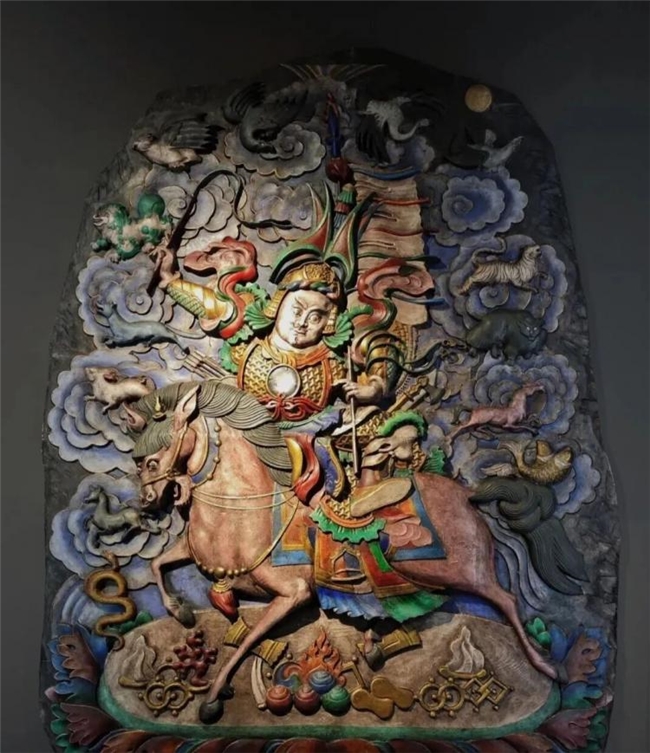
一、流淌在石间的历史长河
在四川西北海拔4180米的雪域高原上,色达县的泥曲河畔静静矗立着一种独特的非遗艺术——藏族格萨尔彩绘石刻。这片传说中岭国长系部落的栖息地,曾是格萨尔王麾下名将的故里,深厚的格萨尔文化积淀,为这门艺术的诞生埋下了伏笔。早在两个多世纪前,当地工匠便将对英雄的崇敬刻入石头,让《格萨尔》这部宏大史诗有了可触摸的实体载体。
On the snow-capped plateau at an altitude of 4,180 meters in northwestern Sichuan, along the Niqu River in Seda County, stands a unique intangible cultural heritage art form — Tibetan Gesar painted stone carvings. This land, legendary home to the long-lineage tribes of the Ling Kingdom and hometown of famous generals under Gesar, has a profound legacy of Gesar culture, laying the foundation for the birth of this art form. More than two centuries ago, local craftsmen carved their reverence for heroes into stones, giving the grand epic Gesar a tangible carrier.
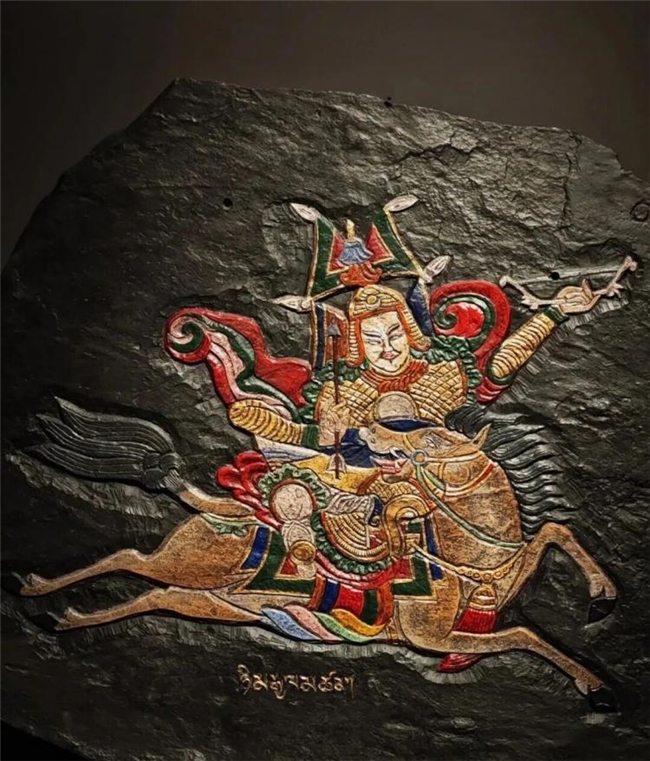
格萨尔王的传奇故事始于公元11世纪,这位一生降妖伏魔、统一百余个部落的英雄,其事迹在藏地代代相传。1790年,岭葱土司翁青曲加修建“格萨尔王庙”,为史诗传承奠定了物质基础;20世纪80年代,在普吾村高僧阿亚喇嘛的发起下,近乎失传的石刻技艺重获新生。2002年,色达、石渠、丹巴三县的彩绘石刻相继公诸于世,震惊学术界;2006年5月20日,它成功入选第一批国家级非物质文化遗产名录,编号Ⅶ-39,成为填补格萨尔文化石刻空白的“艺术活化石”。如今,翁达镇雅格修行地的古老石刻与泥朵乡普吾村的千幅石刻群,共同见证着这门艺术三个多世纪的流转与传承。
The legendary story of King Gesar began in the 11th century. This hero, who subdued demons, eliminated tyrants, and unified over a hundred tribes in his life, has his deeds passed down from generation to generation in Tibet. In 1790, Tusi Wengqing Qujia of Lingcong built the "King Gesar Temple," laying a material foundation for the epic's inheritance; in the 1980s, initiated by the eminent monk Ayya Lama from Puwu Village, the nearly lost stone-carving technique was revived. In 2002, painted stone carvings from Seda, Shiqu, and Danba counties were successively made public, shocking the academic circle; on May 20, 2006, it was successfully included in the first batch of the national intangible cultural heritage list with the number Ⅶ-39, becoming a "living fossil of art" that fills the gap of Gesar culture in Tibetan stone carvings. Today, the ancient stone carvings at the Yage Practice Site in Wengda Town and the thousand-piece stone-carving group in Puwu Village of Niduo Township jointly witness the circulation and inheritance of this art form for more than three centuries.
二、匠心淬炼的制作工序
藏族格萨尔彩绘石刻的诞生,需经艺人千锤百炼,每一步都凝聚着对自然的敬畏与对史诗的虔诚,具体工序如下:
1. 采选石料:艺人就地取材,在色达丰富的天然页岩资源中,挑选石质坚硬、板体规整的石材。石材的天然纹理成为作品的隐性底色,艺人需顺应石纹构思,让自然与匠心完美融合。
2. 精描构图:先以铁凿在石板上勾勒出大致轮廓,确定画面定位;再用细描笔沿着轮廓精画线稿,走线如行云流水,这一步直接决定作品的神韵,每一笔都需贴合《格萨尔》文本对人物、战马的描述。
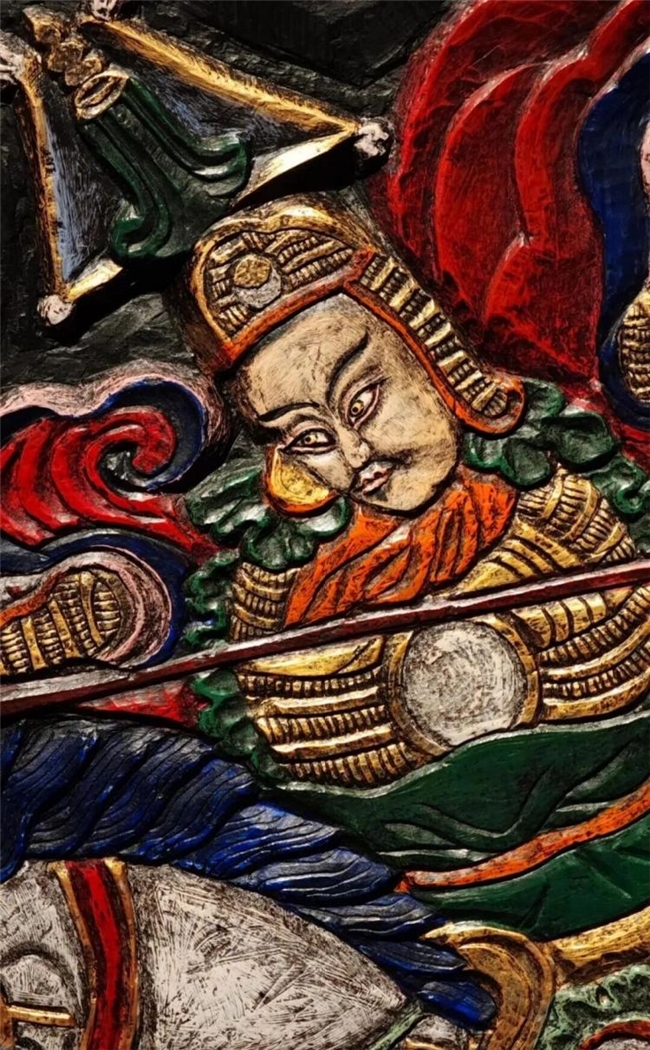
3. 精雕细刻:采用立刻、刮刻、磨划等多种技法,顺着石纹层层雕琢。艺人需控制力道,让人物的衣袂翻飞、战马的鬃毛张扬都栩栩如生,刀法的刚柔并济赋予石刻立体的生命力。
4. 上色封护:先通刷一层白色颜料作为基色,待干透后,用红、黄、蓝、白、黑、绿六种纯色着色——每种颜色都有特定意指,对应史诗中不同人物的身份,当地群众一看便知。最后刷上清漆或“巩砾水”,既锁住色彩,又能抵御高原的严寒与强烈紫外线,让作品历经岁月而不褪色。
The birth of Tibetan Gesar, painted stone carvings, requires craftsmen to go through countless tempering processes, each step embodying reverence for nature and piety for the epic. The specific processes are as follows:
1. Stone Selection: Craftsmen take materials locally, selecting hard and regularly shaped stones from Seda's abundant natural shale resources. The natural texture of the stone becomes the implicit background color of the work, and craftsmen need to conceive according to the stone grain, integrating nature and craftsmanship perfectly.
2. Precise Sketching and Composition: First, outline the general contour on the stone slab with an iron chisel to determine the picture positioning; then use a fine brush to draw detailed line drafts along the contour. This step directly determines the charm of the work, and each stroke must conform to the description of characters and war horses in the Gesar text.
3. Exquisite Carving: Adopt various techniques such as immediate carving, scraping, and grinding, carving layer by layer along the stone grain. Craftsmen need to control their strength to make the characters' flowing robes and war horses' fluttering manes lifelike. The combination of rigidity and softness in the carving technique endows the stone carvings with three-dimensional vitality.
4. Coloring and Protection: First, apply a layer of white pigment as the base color. After drying, color with six pure colors — red, yellow, blue, white, black, and green. Each color has a specific meaning, corresponding to the identity of different characters in the epic, which local people can recognize at a glance. Finally, apply varnish or "Gongli water" to lock the color and resist the severe cold and strong ultraviolet rays on the plateau, allowing the work to retain its color over the years.
三、石上唐卡的鉴赏赏析
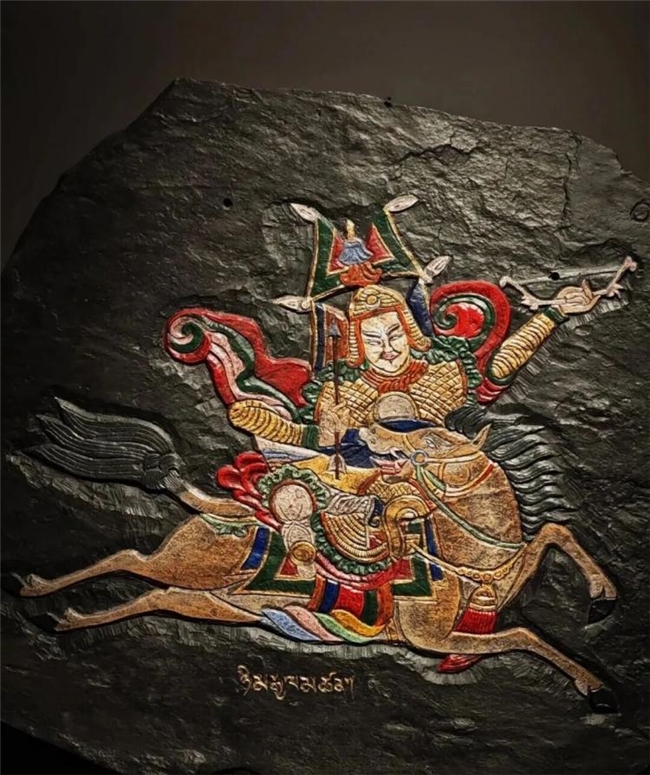
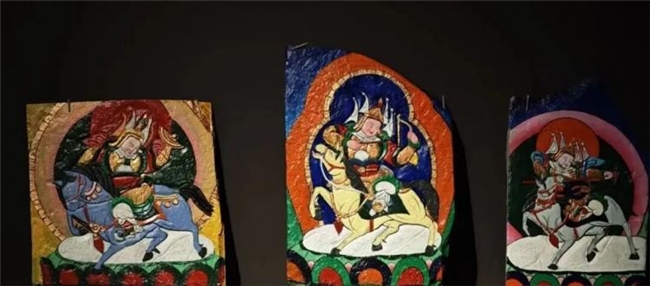
藏族格萨尔彩绘石刻被誉为“石上唐卡”,其鉴赏价值体现在“刻”与“绘”的精妙融合,以及文化与艺术的深度交织。
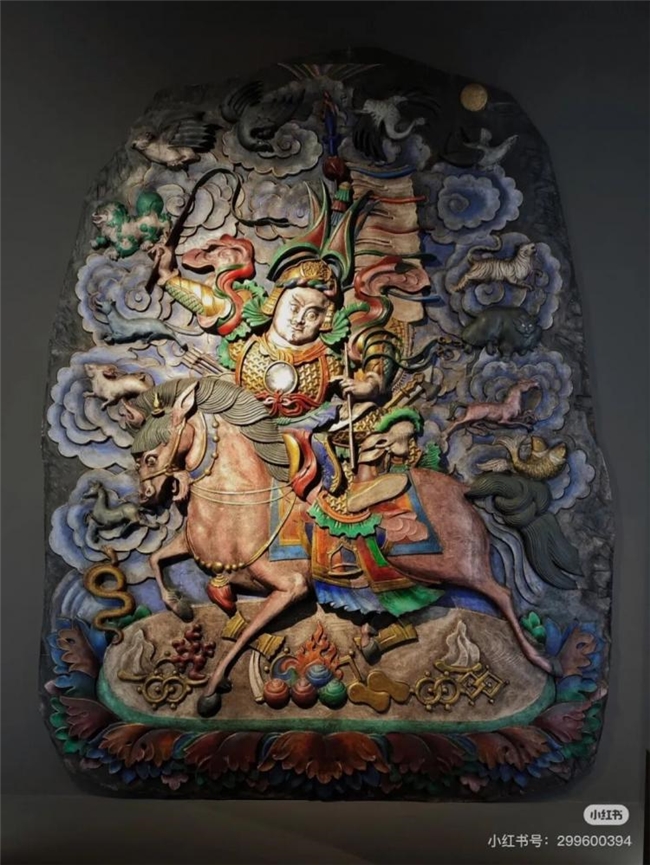
从艺术表现来看,它兼具雕塑的立体感与绘画的鲜活感:雕刻上,凿刻、直刻、斜刻与磨刻技法并用,线条刚劲有力,人物造型精准传神,格萨尔王披甲持剑的英武、众将奋勇争先的激昂,都通过刀痕跃然石上;彩绘上,六种纯色对比鲜明,不使用中间色,却能以“以画补空,以色填空”的智慧,弥补石刻的视觉局限,让画面更富层次感。
从文化内涵来看,它是一部立体的史诗:单幅石刻可独立成画,展现一位将士或王妃的风貌;组合在一起则形成完整谱系,泥朵乡普吾村的五层石台千幅石刻,便完整呈现了格萨尔王、三十员大将、八十位将士及百位尊神的形象。每幅作品都忠实于《格萨尔》文本,人物的武器、战马、服饰皆有据可依,同时融入草原、森林、雪峰等高原元素,让画面自带鲜活的地域气息,成为藏地文化的生动缩影。对藏地百姓而言,这些石刻早已超越艺术范畴,成为承载“除暴安良、为民造福”精神的信仰符号,每一次观赏都是与英雄史诗的精神对话
Known as the "Thangka on Stone," Tibetan Gesar painted stone carvings' appreciation value lies in the exquisite integration of "carving" and "painting," as well as the in-depth interweaving of culture and art.
In terms of artistic expression, it combines the three-dimensional sense of sculpture with the vividness of painting: in carving, techniques such as chiseling, straight carving, diagonal carving, and grinding are used together, with strong and powerful lines and accurate and vivid character shapes. The heroic posture of King Gesar wearing armor and holding a sword, and the passion of the generals forging ahead, all leap off the stone through the knife marks; in painting, the six pure colors form a sharp contrast without using intermediate colors, but with the wisdom of "filling the blank with painting and color," it makes up for the visual limitations of stone carvings and makes the picture more layered.
In terms of cultural connotation, it is a three-dimensional epic: a single stone carving can stand alone as a painting, showing the style of a general or princess; when combined, it forms a complete genealogy. The thousand stone carvings on the five-story stone platform in Puwu Village of Niduo Township completely present the images of King Gesar, thirty great generals, eighty soldiers, and a hundred gods. Each work is faithful to the Gesar text, with the characters' weapons, war horses, and costumes all based on evidence. At the same time, it integrates plateau elements such as grasslands, forests, and snow-capped peaks, making the picture a vivid epitome of Tibetan culture with a fresh regional flavor. For Tibetan people, these stone carvings have long surpassed the scope of art and become a belief symbol carrying the spirit of "eliminating tyrants and protecting the people." Every viewing is a spiritual dialogue with the heroic epic.
四、薪火相传的文化瑰宝
藏族格萨尔彩绘石刻是藏族民间美术史上的创举,它以石为纸、以刀为笔、以彩为魂,将宏大的英雄史诗凝固为可触摸、可感知的艺术珍品。作为格萨尔文化的重要传承方式,它填补了藏族石刻中格萨尔文化的空白,为研究史诗与藏地民间文化提供了珍贵的实物资料。
如今,这门艺术虽面临艺人青黄不接、自然与人为损坏的挑战,但在政府的扶持与传承人的坚守下,正逐步走出困境。色达县建立专门保护机构,普查石刻群与民间艺人,拨专款复原泥朵乡石刻群,让千年技艺薪火相传。藏族格萨尔彩绘石刻不仅是藏地的文化瑰宝,更是中华民族多元文化的重要组成部分,它用石头的坚韧与色彩的绚烂,诉说着英雄的传奇,承载着民族的记忆,在岁月长河中绽放着不朽的光彩。
Tibetan Gesar painted stone carvings are an innovation in the history of Tibetan folk art. With stone as paper, knife as brush, and color as soul, they solidify the grand heroic epic into a tangible and perceptible art treasure. As an important inheritance method of the Gesar culture, it fills the gap of the Gesar culture in Tibetan stone carvings and provides precious physical materials for the study of the epic and Tibetan folk culture.
Today, although this art form faces challenges such as a shortage of inheritors and natural and man-made damage, with the support of the government and the persistence of inheritors, it is gradually getting out of difficulties. Seda County has established a special protection agency to survey stone carving groups and folk craftsmen, allocated special funds to restore the stone carving group in Niduo Township, and passed down the thousand-year-old craft. Tibetan Gesar painted stone carvings are not only a cultural treasure of Tibet but also an important part of the diverse culture of the Chinese nation. With the tenacity of stone and the splendor of colors, they tell the legend of heroes, carry the memory of the nation, and shine immortal in the long river of time.
不只是非遗,更是一种传承
Not only intangible cultural heritage, but also a form of inheritance